Vipassana Meditation Master
Acharavadee Wongsakon
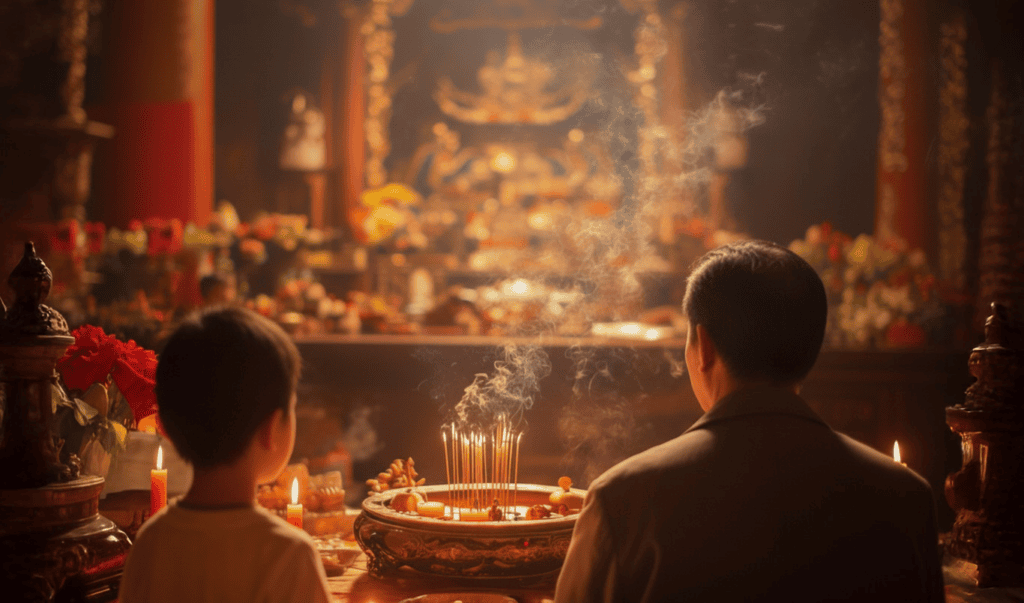
As the season of ancestor worship approaches,many Thai people of Chinese descent are onceagain preparing rituals of remembrance. In the spirit of benefiting both readers and the departed, I wouldlike to share reflections on how these practices can becarried out in ways that truly generate merit—grounded inan understanding of karmic flow and merit-energy.
I come from a Thai–Chinese family and grew upwith the familiar customs of ancestor worship: familygatherings, food offerings, incense, and ang pao (redenvelopes). Later in life, through a deeper study ofBuddhist teachings, I began to see these rituals in a newlight. What follows is an invitation to reconsider howancestor worship can genuinely benefit those who havepassed on.
Misguided Beliefs
Practices such as burning paper money, paperhouses, cars, or offering food directly to spirits are basedon a misunderstanding. Ancestors cannot truly receivethese things. What remains from burning paper is simplyash—the physical transformation of paper into soot. Noactual benefit reaches the deceased.
Somdej Phraputtajarn (Toh Promrangsri) once toldof a man who, while alive, never gave alms but regularlyburned paper offerings. After his death, he found himselfhungry in hell, surrounded by piles of burned paper, theonly “wealth” created by his actions. The food he hadoffered could not nourish him, because he had never trulypracticed generosity.
Why Burning Paper and Offering Food Don’t Create Merit
Burning paper merely destroys objects to whichhumans have assigned imagined value; it benefits noone except the seller. As for food offerings, the deceasedmay perceive them visually but no longer possess physical sense faculties such as taste or touch. Without theenergetic process of eating—through which nourishmentis transformed and absorbed—no benefit can arise. Thisreflects a misunderstanding of how karmic energy functions.
How Ancestors Can Truly Receive Merit.
If one wishes to give food or wealth to the departed, it must first be given to the living. The merit from acts of generosity can then be consciously dedicated to the deceased. Giving with compassion generates wholesome karma, producing immediate joy for the giver and lasting spiritual benefit.
After death, it is one’s actions that accompanyconsciousness as karmic energy into subtler realms. Beingswho enjoy abundance in heavenly states do so becausethey cultivated generosity selflessly during their human lives.When merit is dedicated with sincere intention, the departedare able to connect with and receive the wholesome resultsof those actions.
Does Giving to Ordinary People Create Merit?
Yes. The amount of merit depends not only on therecipient’s moral qualities but also on the purity of the giver’sintention. Even giving to ordinary people can produce greatmerit when done with genuine joy and goodwill.
A Buddhist story tells of a celestial being withthousands of followers who explained that his happinessarose from joyfully sharing food with friends duringchildhood. It wasn’t the value of the gift, but the sincerityand happiness in giving that generated powerful karmicenergy.
Allowing Ancestors to Benefit from Family Gatherings
Families who wish to continue traditional rituals—suchas setting up offering tables or burning paper—for culturalreasons may certainly do so, as long as they understandthat these acts themselves do not create merit. Instead,true benefit arises when hosts take joy in feeding relatives,supporting children, or caring for others. The merit fromthese actions can then be sincerely dedicated to theancestors.
For even greater benefit, one may offer food orassistance to morally virtuous people, children, or the sick,and then dedicate the resulting merit to the departed.
As for honoring deities, true respect does not lie inofferings alone, but in gratitude, remembrance, and ethicalconduct. This is respect expressed through practice, notmerely ritual.
Honoring Elders Who Hold Traditional Beliefs
For elders who remain deeply attached to traditionalcustoms, it is best to allow these practices to continue forthe sake of their peace of mind. Remembering ancestorsis, after all, an expression of gratitude. Younger generationswho understand these teachings can quietly perform actsof genuine merit on their behalf. This balanced approachrespects tradition while gradually replacing ineffectivepractices with meaningful ones.
—
View full content by subscribing or buy on Shopee.