FROM CHAOS TO CLARITY
Some people arrive at clarity through faith. Others reach it through lived experience—by questioning,
experimenting, and occasionally losing their way along the journey.
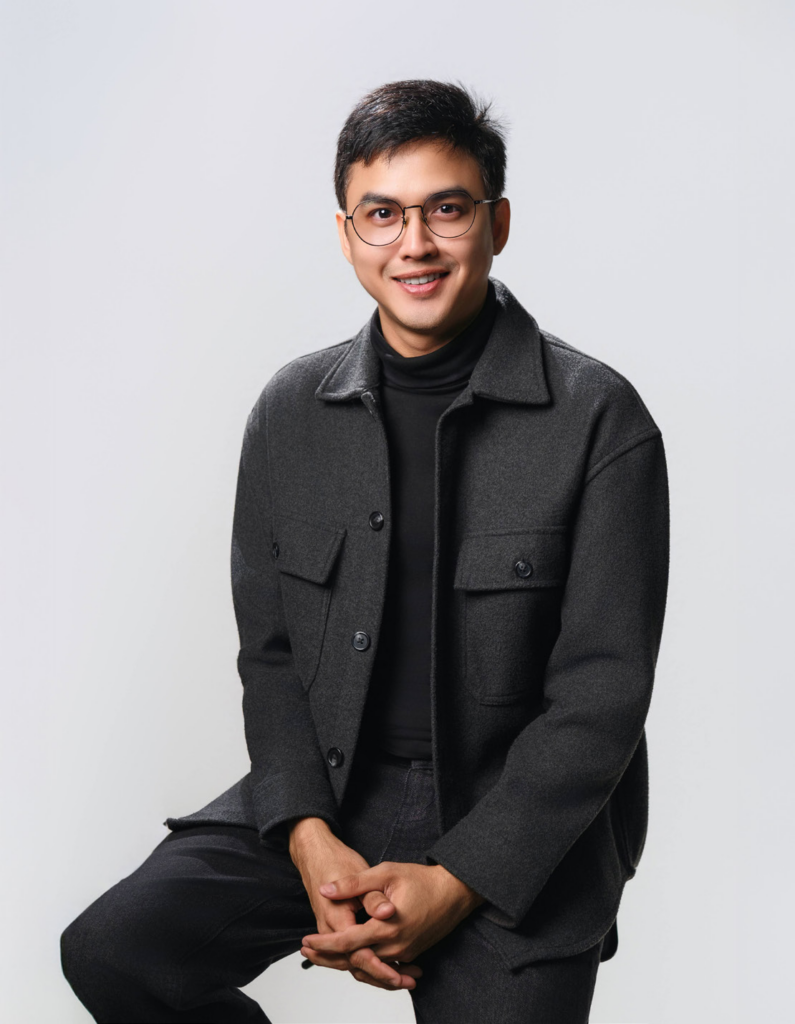
For Keerati Nongmeesap (Keng), a highly regarded photographer at 425Studio, growing up in a household marked by constant conflict and financial instability taught him early on that while no one can choose where they are born, everyone can choose who they become. The best way forward, he learned, was to act—while continuing to question.
Intelligent and quick-witted by nature, his mind was rarely still. Questions surfaced constantly: Why do people behave the way they do? Why do certain things happen? And how can they be prevented? Those questions ultimately pushed a hot-headed teenage street racer to make a radical decision at 18—to overturn the board of his own life entirely. He chose to educate himself, refusing to let scarcity define his limits, stepped into the working world with determination, and within just two years was able to secure a loan for his first home.
And yet, something still felt missing. Despite outward success and being surrounded by good people, a quiet sense of incompleteness lingered—until he began practicing Vipassana meditation a few years ago.
By committing himself to the teachings of the Buddha and his teachers—this time without questioning—he discovered that he had not only found answers to life, but also something unexpected: each morning became a genuine joy, filled with lightness and ease, in ways even he had never imagined.

You’ve said your childhood was intense pushed to the extreme before making a complete turn in life.
Absolutely extreme. If I could go back and meet my younger self, I’d say: yes, that was real. I grew up in a broken family, surrounded by conflict. Adults argued constantly, and as a child, I was often forced into impossible situations—being asked to take sides when there was no safe choice. Home felt heavy with pressure.
We were poor, too—poor in the sense that you couldn’t just eat what you wanted. Everything required saving. Back then, the ultimate luxury for me was three Oreo cookies with a bottle of milk. I’d eat them slowly, savoring every bite. I was the eldest child, with two younger sisters, plus cousins raised together under the same roof. Food and belongings had to be shared carefully.
Life felt suffocating at home. But outside, I was a different person. I did well in school, excelled in sports, and became a national-level track athlete in my early teens. I won competitions, ranked highly, and nearly made it to international events. Academically, I wasn’t into memorization—I needed to understand principles. I questioned everything. If something didn’t make sense, I wouldn’t believe it.
You’re someone who always questions before acting. What led you to faith in the Buddha?
To me, life’s problems aren’t that different from math or science problems—you don’t guess; you understand the formula. Once I realized that the Buddha fully understood life, I asked myself: why search everywhere else?
I’ve always had a restless, thinking mind. One day, driving home from work, a thought hit me: If I’m born poor, does that mean I’ll always lose to the rich—even when it comes to making merit?
But strangely, my mind answered itself. Merit isn’t about money. If a wealthy person donates money earned dishonestly, no matter how large the amount, it carries no real value. But if someone with little gives sincerely, that intention matters far more.
I didn’t have deep spiritual knowledge back then, but that realization brought immense peace. I remember smiling and telling myself: My mind must stay wholesome. I was about 20. From that day on, I never resented being poor. Rich or not stopped being the point—I knew what kind of person I wanted to be.
When did your interest in spirituality begin?
It grew gradually through questioning life. Ironically, I lived near a temple—but seeing monks gamble or break discipline turned me off religion entirely. Buddhism didn’t impress me then.
The exception was listening to teachings by Luang Por Chah on Buddhist holy days. His words were simple, direct, and practical. I also liked reading short Dhamma quotes posted around temples. That was probably my real entry point.
Which of his teachings stayed with you most?
Letting go—but not neglect.
There’s a story where a monk’s hut collapsed after a tree fell on it. When asked why he let it happen, the monk said he was “letting go.” Luangpor Chah replied that letting go doesn’t mean abandoning responsibility—it means caring without attachment. That lesson hit me instantly.
—
View full content by subscribing or buy on Shopee.