the World’s Loneliest Most-beloved Superstar
Before you judge Michael Jackson, ask yourself: do you know what it feels like to be famous at five, alone at twenty, and misunderstood forever?
There is a Buddhist concept that the suffering we witness in others is often a mirror—a reflection not of who they are, but of what we, the observers, choose to see. Nowhere does this feel more achingly true than in the story of Michael Joseph Jackson, the most famous human being who ever lived, and perhaps one of the loneliest.
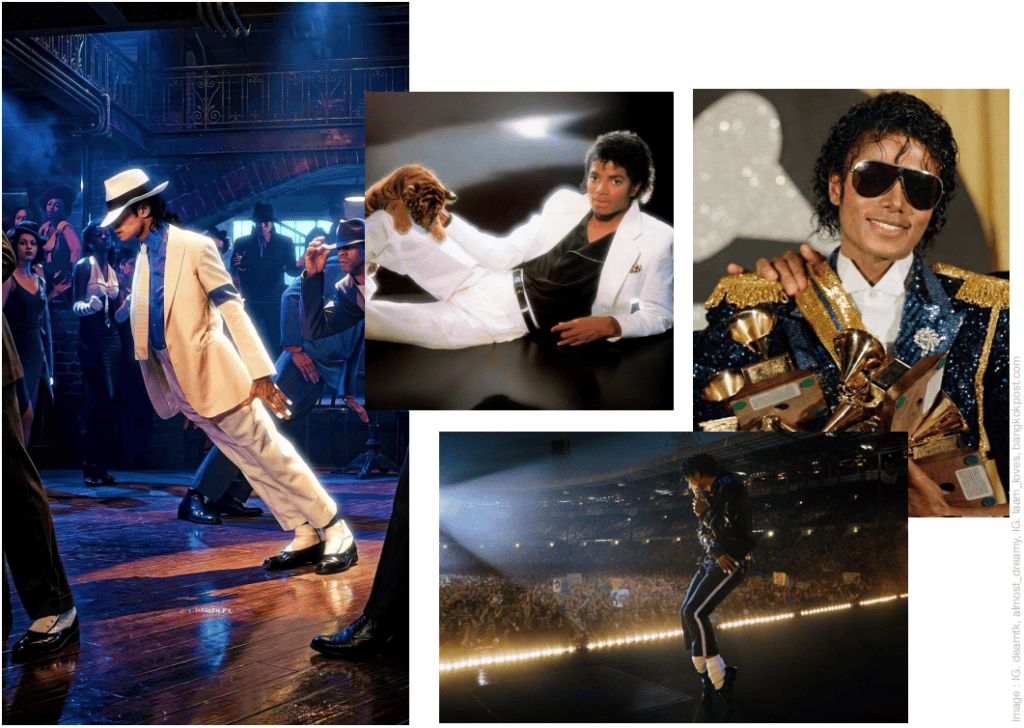
When the biopic Michael hit theaters recently, receiving largely positive reviews, it reignited global conversations about the King of Pop. While debates about his legacy and choices continue to burn, a quieter, more vital question surfaces: did any of us (the fans, the press, the public) ever really try to see him?
The answer was often a resounding, painful no.
In the 2003 documentary Living with Michael Jackson, filmed by British journalist Martin Bashir, Jackson laid bare his internal landscape.
“People think they know me, but they don’t. Not really. Actually, I am one of the loneliest people on this earth. I cry sometimes, because it hurts. It does. To be honest, I guess you could say that it hurts to be me.”
That wasn’t the only time he openly shared his feelings. In his 1988 autobiography, Moonwalk, he detailed intense isolation despite standing at the absolute pinnacle of global fame. Some might say that is the price a genius must pay, but is that really so? Or is it simply human nature to alienate those who are profoundly different from us?
In Michael’s case, the loneliness began in childhood. Born in Gary, Indiana, in 1958 – the eighth of ten children in a cramped two-bedroom house – he was performing by age five. By nine, he was the lead singer of The Jackson 5, touring America and recording hits for Motown. He never experienced a normal childhood; his youth was traded for rehearsals, stage lights, and a domineering father.
As he transitioned into a solo artist, his albums became an extension of his soul. Thriller (1982) and Bad (1987) propelled him to a level of fame that modern pop culture can scarcely replicate. Yet, as his career scaled unimaginable heights, his music shifted from the joyful rhythms of youth to a deeply conscious lifestyle philosophy. Songs like “Man in the Mirror” pleaded with listeners to realize that global change starts with internal self-reflection, while “Heal the World” and “Will You Be There” reflected his desperate desire for empathy and spiritual unity.
—
View full content by subscribing or buy on Shopee.