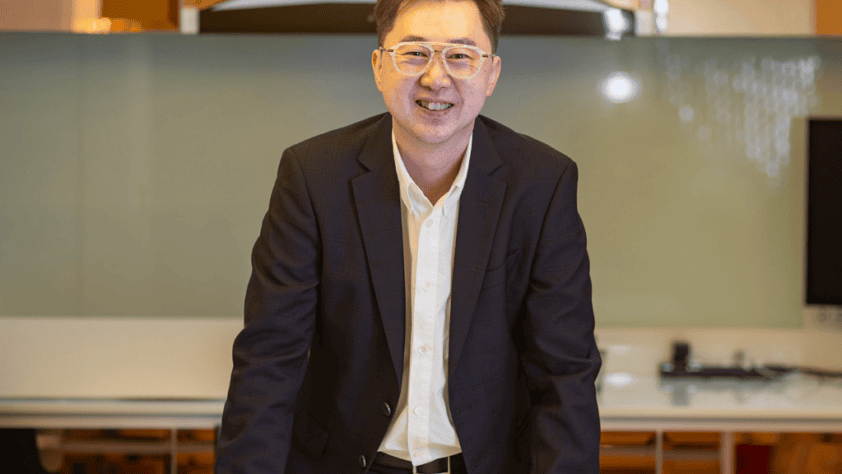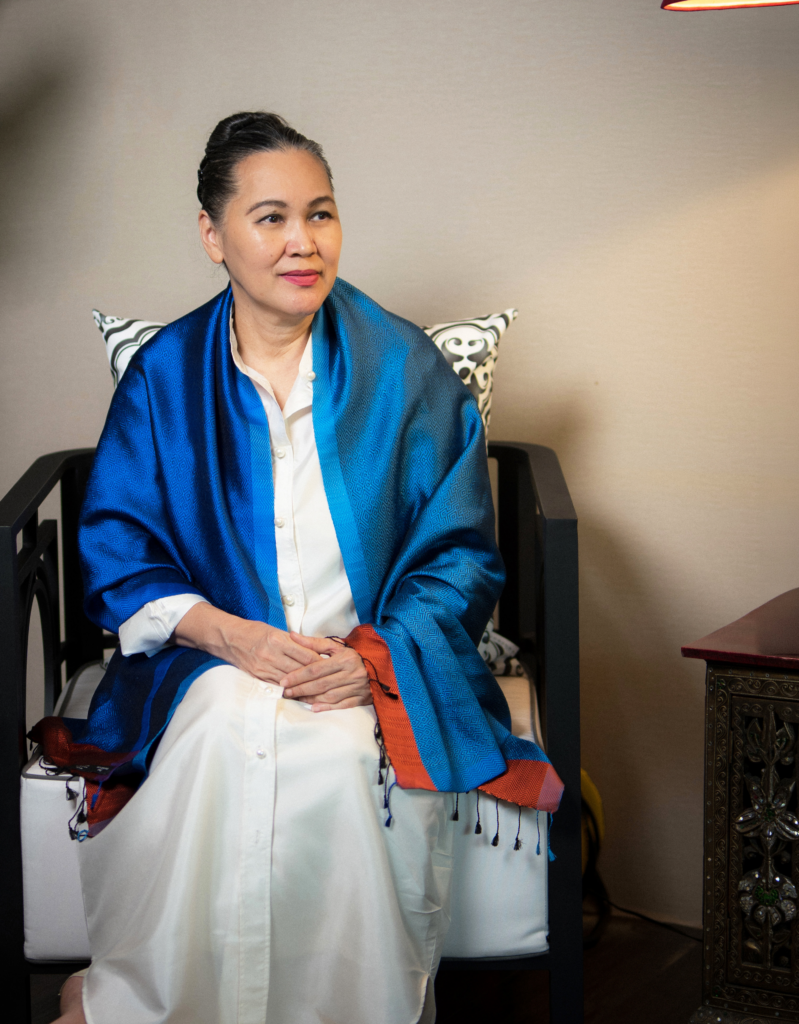
Vipassana Master Acharavadee Wongsakon
Founder and President of Knowing Buddha
and School of Life Foundation
Recently, the head of Knowing Buddha stepped fully into a new kind of public role: politics. Late last year, ahead of Thailand’s snap general election, Master Acharavadee began posting her views on the country’s political situation in direct, unfiltered terms – a move that surprised many longtime followers. Some felt a Vipassana teacher ought to stay outside political conflict altogether. Instead, her posts addressing the monarchy, national identity, and what she saw as the dangers of reform-minded politics driven by younger generations drew overwhelming attention reaching into the millions, and mainstream media soon picked up on them.
In this conversation, she opens up about what pushed her to speak out, the backlash she’s faced and how she reconciles her role as a Vipassana teacher with this new one. She also shares her views on gratitude, love of country, and what she sees as the erosion of traditional values among Thailand’s younger generation.
And if you look closely, you’ll see that the core of her message hasn’t changed at all: Respect is Common Sense.
What made you decide to step out of teaching Vipassana and into political and social commentary? What was the turning point?
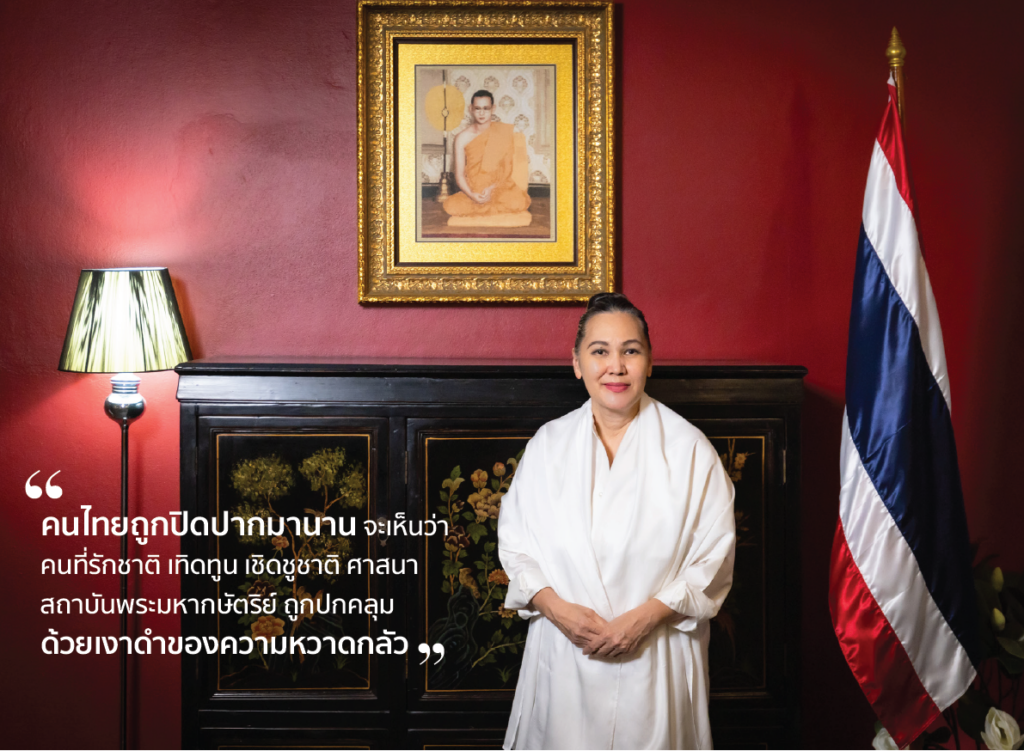
The turning point was love of country. Thai people have been silenced for far too long. People who love their nation, who honor and uphold the country, religion, and monarchy, have been living under a dark shadow of fear. Anyone who openly showed love for the nation and reverence for the monarchy would be attacked, piled on, until no one dared stand up to defend what’s right or take a stand to protect the institution. So I decided to speak out fully. Enough was enough. We can’t let the power of good fall under the power of evil. I was among the first generation of people to step out – to separate myself from purely teaching Dhamma and speak directly about politics.
Before going fully public, were you worried about how it might affect your image and your Dhamma work?
Was I worried? Yes, honestly. But I felt it was time to make that trade. I used to work purely in Dhamma but telling myself “I’m a Dhamma person, so I’ll just stay quiet” wasn’t an option anymore. This was the time to be brave, to help bring about change.
I didn’t expect the backlash to be this intense although I also didn’t expect the support to outweigh it. What surprised me most was that the strongest pushback came from Dhamma people themselves, who interpreted things this way: once you practice Dhamma, you’re not supposed to get involved in anything, not supposed to voice opinions about the nation at all you’re supposed to stay within the Dhamma circle, talk only about Dhamma, about teaching. But really, I explain it this way: if we allow politicians without integrity to tear down the nation’s moral foundation, it affects the monarchy, and it affects religion too. For example, if they don’t want to support Buddhism, we won’t be able to gather to carry out religious duties, or even teach moral principles, without any support at all. Thinking that the nation isn’t our concern just because we practice Dhamma, that’s not right. That’s negligence disguised as Dhamma, using it as an excuse to escape our civic responsibility to help protect the Dhamma, the nation, the religion, and the monarchy.
So the pushback that’s worn me down has actually come more from Dhamma people than from ordinary people. Those who study Dhamma only on the surface are the real obstacle. They are the ones who keep others from stepping up to defend the country.
Has the response been different from what you expected? And by how much?
Before that, on my Dhamma page, I’d get maybe 300-something likes, read only within a small circle, practically begging people to come read (laughs). This time it was in the tens of thousands. Later, each post was getting views in the millions. Honestly, it shocked me too that what I was writing was helping fuel real momentum in society. It also gave other people courage. After that, people who’d been hiding started speaking up too what we call “burner accounts” without a face started showing their faces more.
The foundation also works with children young kids, older kids, and young people through the Journey to the Mind course under the School of Life Foundation. Do you plan to expand this curriculum to schools or other institutions?
We teach Dhamma at every level: beginner, intermediate, and advanced. The beginner level teaches meditation and foundational thinking. The intermediate level includes an overnight retreat format 4 days, 3 nights. The advanced level is Vipassana meditation practice itself. At the beginner and intermediate levels, we continuously instill virtue and gratitude: gratitude toward the nation, religion, the monarchy, and toward one’s parents, as core values. But it’s not about repeating “you must be grateful.” It’s about helping them see it through reasoning, so they accept it through their own understanding.
For example, someone once asked why we need to feel gratitude toward the nation at all. I explain it this way: when someone’s life becomes successful, it isn’t because of their own talent alone it comes from support and momentum that starts with parents, then family, then society, and then the nation…If we were refugees living in tents, with no schools, no hospitals, no opportunities to go anywhere or make a living would we have gotten to where we are today? So this is a virtue we owe a debt to repay. That’s how I teach it: step by step, cause and reason, encouraging people to reflect logically.
Another phrase you hear often is: “I never asked to be born, so my parents are responsible for making my life and wellbeing as good as possible.”
If you want to argue it purely intellectually, that’s not wrong. But the real question is: responsible to what extent? If all that responsibility means is providing clothes and a bed and then it’s done, you could just as easily leave the child at an orphanage. Or if you’re raising them at home, you could raise them however comes easiest feed them whatever you can afford, send them to whatever school is available. But that’s not what most children actually receive. If it were just duty without love and compassion, the care each child gets wouldn’t come close to what it actually is.
But when parents have compassion and kindness, and pour everything good into that life, that’s what makes us human. Being human means having a sense of duty to repay. If you lack that awareness of gratitude and repayment, you have to ask where has your basic humanity gone? Even if a friend treats us to one birthday meal, buys us one meal, we still feel grateful to them. So why would we abandon our gratitude to our parents who devote themselves and give everything not just one meal, but thousands, tens of thousands, who try every way to give their children an education, who wish they could take on their child’s illness themselves?
No matter who came up with this idea, and however it was constructed, I suggest you turn back to ask yourself, to ask your own conscience: should we believe what a stranger tells us, or believe our own true feelings?
—
View full content by subscribing or buy on Shopee.