Most Stylish Comeback Yet
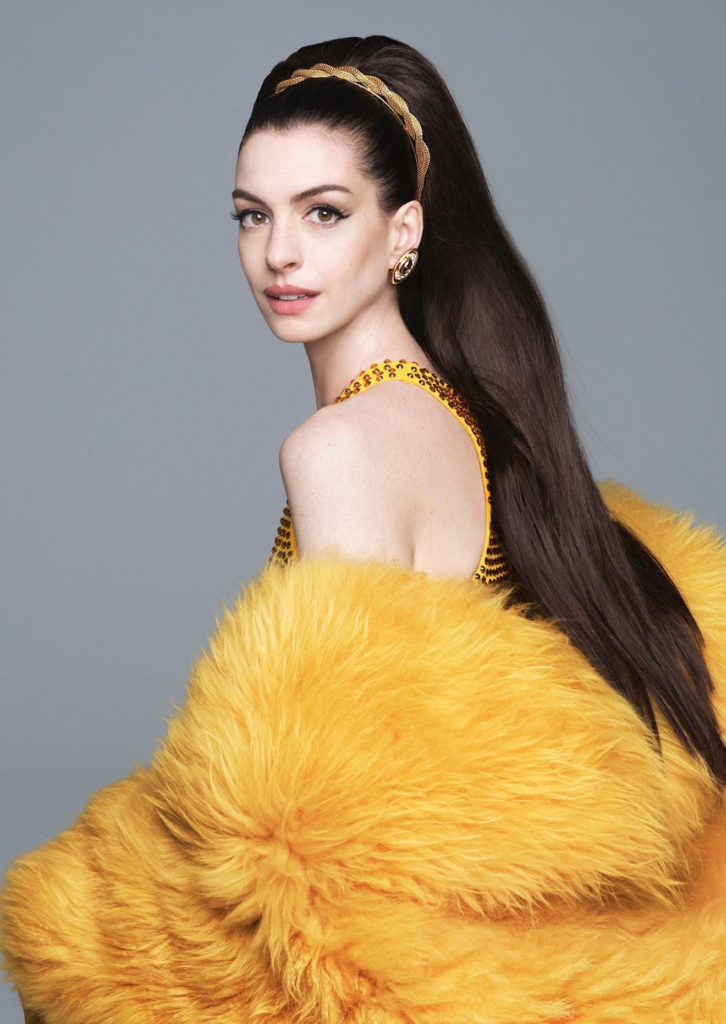
The fashion world is about to get a lot more crowded, and the elevator at Runway is finally going back up. On May 1, Anne Hathaway officially returns to the role that defined a generation of career-starters in the highly anticipated sequel, The Devil Wears Prada 2.
Twenty years after Andy Sachs tossed her phone into a Parisian fountain, she’s back, but not the same wide-eyed assistant who didn’t know the difference between cerulean and lapis. In many ways, Andy’s evolution mirrors Anne Hathaway’s own journey: a story of surviving the high-pressure “burn” of fame and coming out the other side with a style that is entirely her own.
At age eight, when Hathaway watched her mother perform in the first national tour of Les Misérables as Fantine, she instantly became fascinated with the stage. Something locked into place that night — a certainty that would shape everything. Her father, Gerald, was a lawyer, and her mother, Kate McCauley, was a stage actress. Born in Brooklyn, raised in the suburbs of New Jersey, she was not a child of privilege so much as a child of passion. She became the first teenager to join the Barrow Group Theater Company’s acting program.
Three days after performing at Carnegie Hall, Hathaway was cast in the short-lived Fox television series Get Real. Then came The Princess Diaries in 2001. Overnight, she became America’s favorite awkward girl-turned-royal. The world had decided what she was: wholesome, earnest, safe for children.
She had other ideas.
Hathaway deliberately dismantled the princess image, choosing Brokeback Mountain and Rachel Getting Married — raw, uncomfortable films that announced she wasn’t just a tiara and a smile. In 2006, she starred alongside Meryl Streep and Emily Blunt in the critically and commercially successful The Devil Wears Prada. She was the industry’s “Golden Girl.” But as she reached the peak – winning the Oscar for Best Supporting Actress her raw, heartbreaking performance as Fantine in Les Misérables (2012) – the atmosphere shifted.
She was dazzling and funny. A real sunshine everywhere she went. However, her sincerity that felt refreshing and sincere slowly became a problem.
There is a particular cruelty the public reserves for women who seem too happy about their own success. Psychologists call it “tall poppy syndrome” – the reflexive urge to cut down anyone who rises too high, especially if they appear to enjoy the ascent. A 2015 BuzzFeed article summed it up: “When you do everything right and society hates you for it, that’s Anne Hathaway Syndrome.”
—
View full content by subscribing or buy on Shopee.