Life, Politics and Price to Pay
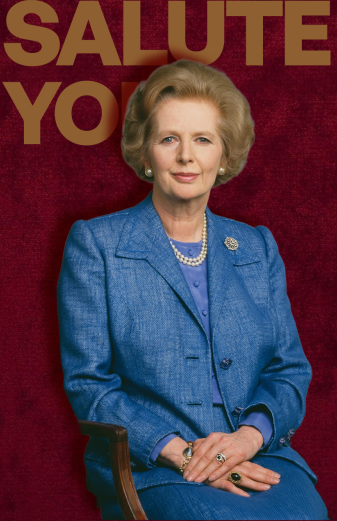
In the annals of modern political history, few names carry the weight, or the controversy, of Margaret Thatcher. She was not merely Britain’s first female Prime Minister, but the longest-serving leader of the twentieth century. And she came not from aristocracy or privilege, but from above a grocer’s shop in the quiet market town of Grantham.
Thatcher was born in 1925. Her family was middle-class with strict rules. Her father, Alfred, owned the shop and taught her to work hard and depend on herself. When she chose to study chemistry at Oxford, it was less about passion and more about pragmatism a science degree, she reasoned, offered real social and financial security.
Her first step in electoral politics came in 1950. The lesson for her first defeat was that she needed a law degree to sharpen her political edge. Thatcher became a tax barrister and entered Parliament by 1959.
Her strong leadership and decisiveness quickly spread. As Education Secretary, she made a decision that would follow her for years; scrapping free school milk and later earning the gleeful tabloid nickname “Margaret Thatcher, Milk Snatcher.” But her goal was bigger than that. It was nothing less than the complete overhaul of a British economy that she believed was slowly suffocating under the weight of state dependency and trade union power.
The nickname “Iron Lady” was first used by the media in the Soviet Union as an insult, but Thatcher embraced it with relish. She became Prime Minister in 1979 when the country was facing rampant worker strikes and ongoing inflation.
Thatcher was adamantly against the unions and government aid programs as she believed they made people lazy. Instead, she slashed income taxes and sold off stateowned industries. Her critics were fierce. Her defenders were fiercer. When unemployment reached three million in 1981 and the pressure to reverse her decisions was immense, Thather refused to back down. “Making the rich poorer does not mean that you make the poor richer,” she once said.
Thatcher’s popularity rose sharply when she led Britain to win the Falklands War in 1982. The nation, so recently mired in gloom, surged with pride. She won re-election, then won again in three consecutive landslide victories.
Her resolve extended to the darkest corners of the political landscape. When IRA prisoners launched hunger strikes in the Maze Prison, her response was ice-cold. “Crime is crime is crime. It is not political. It is crime.”
But the seemingly invincible prime minister was finally brought down by her own team. In 1990, a combination of the deeply unpopular Community Charge — the “Poll Tax” — and her growing resistance to European integration had fractured her own cabinet. One by one, ministers withdrew their support. When the numbers made it clear she could not survive a leadership vote, she resigned.
It was a very sad and painful moment for her. In her own words, it was clearly a “treachery with a smile on its face.”
In her final remarks, she spoke with a hurt that was rare for her. “I am disappointed that I have been forced to leave. I am very happy that I left the United Kingdom in a much, much better state than when we came to office.”
Long after her passing in 2013, her life and work have remained a hot debate. The prime minister was loved with passion and hated with equal intensity. However, nobody can dispute that her ideas, known as “Thatcherism,” completely changed the foundation of Britain, from a country heavily relying on the government’s assistance for 30 years to a country of free market.
On the unveiling of her bronze statue in Parliament, Thatcher gave one final piece of her characteristic wit, “I might have preferred iron, but bronze will do. It won’t rust.”
—
View full content by subscribing or buy on Shopee.